

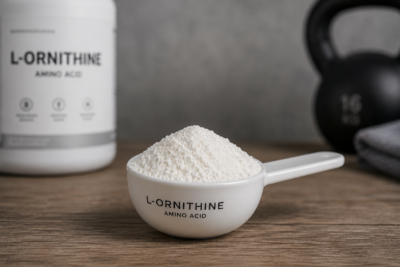
L-Ornithine: The Amino Acid That Clears Fatigue, Supports Sleep & Detoxifies Ammonia
Introduction
In the world of amino acids, some get all the spotlight—like glutamine for gut health or arginine for blood flow. But quietly working behind the scenes is L-Ornithine ,a lesser-known yet remarkably powerful amino acid with unique benefits. Unlike its more famous cousins, L-Ornithine isn’t used to build proteins directly. Instead, it plays a critical role in the **urea cycle**—your body’s natural system for removing toxic ammonia.
If you’ve ever felt brain fog after a high-protein meal, experienced deep muscle fatigue after intense exercise, or struggled with poor sleep quality, L-Ornithine might be the missing piece. From athletes seeking faster recovery to individuals looking for better rest and liver support, this amino acid deserves serious attention.
In this guide, we’ll cover everything you need to know: what L-Ornithine is, its evidence-backed benefits, potential side effects, proper dosage, and answers to common questions.
What is L-Ornithine & Why Is It Used?
L-Ornithine is a non-essential amino acid, meaning your body can produce it naturally from another amino acid called **arginine**. However, during times of stress, intense exercise, or high protein intake, your natural production may not be enough—making supplementation beneficial.
What does L-Ornithine do in the body?
L-Ornithine is a key player in the urea cycle, which takes place in your liver. Here’s how it works:
1. When you digest protein, your body produces ammonia—a highly toxic byproduct.
2. Ammonia must be converted into urea (a much safer substance).
3. L-Ornithine helps facilitate this conversion.
4. Urea is then excreted through your urine.
Without enough L-Ornithine, ammonia can build up in your blood and brain, leading to fatigue, confusion, and even more serious health issues.
Why is L-Ornithine used as a supplement?
– To reduce fatigue caused by ammonia buildup during exercise
– To improve sleep quality and reduce stress markers
– To support liver health in people with mild dysfunction
– To enhance athletic recovery and muscle repair
– To help with wound healing (often combined with arginine)
Benefits of L-Ornithine
1. Reduces Exercise-Induced Fatigue
One of the most well-documented benefits of L-Ornithine is its ability to fight fatigue. During intense physical activity, your muscles produce ammonia as a waste product. Elevated ammonia levels are directly linked to:
– Muscle tiredness
– Reduced endurance
– Prolonged recovery time
How L-Ornithine helps:
By accelerating the urea cycle, L-Ornithine clears ammonia from your bloodstream more quickly. Studies show that athletes taking L-Ornithine experience less fatigue and can train longer with faster recovery between sessions.
2. Improves Sleep Quality & Reduces Stress
Feeling wired at night or waking up exhausted? L-Ornithine may help. Research has shown that L-Ornithine supplementation can:
– Lower cortisol (the stress hormone) after physical or mental stress
– Reduce subjective feelings of fatigue and stress
– Improve sleep quality and reduce sleep disturbances
In one study, participants who took L-Ornithine before bed reported feeling more rested upon waking and experienced less daytime fatigue.
3. Supports Liver Health & Detoxification
Your liver is responsible for processing toxins, including ammonia. When liver function is compromised (even mildly), ammonia can accumulate and cause problems. L-Ornithine is often used in clinical settings to support patients with:
– Mild to moderate liver disease
– Hepatic encephalopathy (a condition where ammonia affects brain function)
For healthy individuals, L-Ornithine acts as a preventive measure—helping the liver manage daily protein metabolism and reducing toxic buildup.
4. Enhances Muscle Recovery & Growth
Because L-Ornithine helps clear metabolic waste, it may also speed up post-exercise recovery. Some studies suggest that combining L-Ornithine with L-Arginine can:
– Increase growth hormone levels (mild but meaningful effect)
– Reduce muscle soreness after resistance training
– Support collagen synthesis and wound healing
For bodybuilders, endurance athletes, and weekend warriors alike, this translates to less downtime and better long-term progress.
5. Supports Kidney Health
By converting toxic ammonia into urea that is excreted through urine, L-Ornithine indirectly supports kidney function. While it doesn’t directly treat kidney disease, maintaining low ammonia levels reduces the burden on these vital organs.
6. May Help with Insulin Sensitivity
Emerging research suggests L-Ornithine may improve insulin sensitivity, though more studies are needed. This could be beneficial for individuals with metabolic syndrome or those at risk for type 2 diabetes.
Side Effects of L-Ornithine:
L-Ornithine is considered ” very safe ” for most people when taken at recommended doses. However, as with any supplement, some individuals may experience mild side effects.
Common Side Effects (mild, usually temporary):
– Digestive discomfort: Nausea, diarrhea, or stomach cramps (especially at higher doses)
– Bloating or gas: Particularly if taken on an empty stomach
Who Should Be Cautious?
| Condition | Recommendation |
| Pregnancy & breastfeeding | Limited safety data; consult your doctor before use |
|Severe liver disease | Use only under medical supervision |
| Kidney disease | Ornithine is processed through kidneys; adjust dose with medical guidance |
| Low blood pressure| Ornithine may slightly lower blood pressure; monitor if you take antihypertensives |
Severe reactions (extremely rare):
– Allergic reactions (hives, difficulty breathing, swelling)
– Severe digestive distress
> Important: L-Ornithine is generally well-tolerated, but always start with a lower dose to assess your personal response.
Dosage & Safe Usage
Recommended Daily Doses:
| Purpose | Typical Dose | Timing |
| General wellness & fatigue reduction | 500mg – 1,000mg | Once daily, morning or afternoon |
| Exercise performance & recovery | 1,000mg – 2,500mg | 30-60 minutes before workout |
| Sleep support | 400mg – 800mg | 30-60 minutes before bed |
| Liver support (mild cases) | 1,500mg – 3,000mg | Divided into 2-3 doses daily |
| Clinical use (under supervision) | Up to 6,000mg daily | As directed by physician |
How to Take L-Ornithine:
– Form: Available as capsules, tablets, or powder. All forms are effective.
– With or without food: Food may reduce mild digestive discomfort.
– Stacking: Often combined with L-Arginine for enhanced recovery and growth hormone support.
– Cycling: Not necessary for general use, but some people cycle 2 months on / 1 week off.
Important Interactions:
| Interaction | Effect |
| Blood pressure medications | May enhance blood pressure-lowering effects; monitor closely |
| Diabetes medications | Could potentially affect blood sugar; check glucose levels |
| Nitric oxide boosters | Combine safely, but monitor blood pressure |
| Other amino acids | Generally safe and often beneficial when combined |
> Always consult a healthcare professional before starting L-Ornithine, especially if you have a medical condition or take prescription medications.
Frequently Asked Questions (FAQs)
1. Is L-Ornithine the same as L-Ornithine Alpha-Ketoglutarate (OKG)?
No. OKG is a salt form of L-Ornithine bound to alpha-ketoglutarate. OKG is often marketed specifically for athletic performance and muscle growth. While similar, standard L-Ornithine is more common and widely available.
2. Can I take L-Ornithine every day?
Yes. For most people, daily use at recommended doses is considered safe for long periods. Many athletes take it consistently during training seasons.
3. How long does L-Ornithine take to work?
– Fatigue reduction: Many people notice effects within 1-3 days
– Sleep improvement: Often noticeable within the first week
– Exercise recovery: Benefits typically seen within 1-2 weeks of consistent use
4. Does L-Ornithine help with weight loss?
Indirectly, yes. By improving exercise recovery and reducing fatigue, L-Ornithine may help you train more consistently. However, it is not a direct fat burner. Combine with proper diet and exercise for best results.
5. Can I take L-Ornithine with other amino acids?
Absolutely. L-Ornithine is frequently combined with:
– L-Arginine (enhances growth hormone and circulation)
– L-Citrulline (synergistic ammonia clearance)
– BCAAs (comprehensive muscle support)
6. Is L-Ornithine safe for the liver?
Yes. In fact, L-Ornithine supports liver function by aiding ammonia detoxification. It is often used therapeutically for mild liver conditions. However, if you have severe liver disease, always consult your doctor first.
7. What happens if I miss a dose?
Just take it when you remember. If it’s close to your next dose, skip the missed one. Never double up to catch up.
8. Can I give L-Ornithine to my child?
Not without medical supervision. Children have different metabolic needs, and safety data for pediatric supplementation is limited.
9. Does L-Ornithine cause bloating?
Some people experience mild bloating or gas, especially at higher doses. Taking it with food usually reduces this effect.
10. Is L-Ornithine vegan?
Yes. Most L-Ornithine supplements are produced via fermentation and are vegan-friendly. Always check the label for capsule materials (gelatin vs. plant-based).
Reality & Final Note
L-Ornithine is not a flashy supplement, but it is an incredibly practical one. Unlike many ingredients that promise dramatic results but deliver little, L-Ornithine does exactly what it claims—it helps your body clear ammonia, reduces fatigue, and supports restful sleep.
The reality:
– It works best for active individuals. If you rarely exercise or eat a very low-protein diet, you may notice less benefit.
– It’s not a stimulant. Don’t expect an energy rush. Instead, expect to feel less tired after exertion and more rested in the morning.
– Quality matters. Choose reputable brands that provide third-party testing for purity.
– Results are subtle but real. L-Ornithine won’t transform your life overnight, but consistent use leads to meaningful improvements in recovery, sleep, and daily energy levels.
Final recommendation:
If you’re an athlete struggling with post-workout fatigue, someone who feels drained after high-protein meals, or simply looking for a natural way to sleep better, L-Ornithine is absolutely worth trying. It’s safe, affordable, and backed by solid science.
Start with 500mg to 1,000mg per day, monitor how you feel for two weeks, and adjust as needed. For sleep benefits, take it 30-60 minutes before bed. For exercise recovery, take it pre- or post-workout.